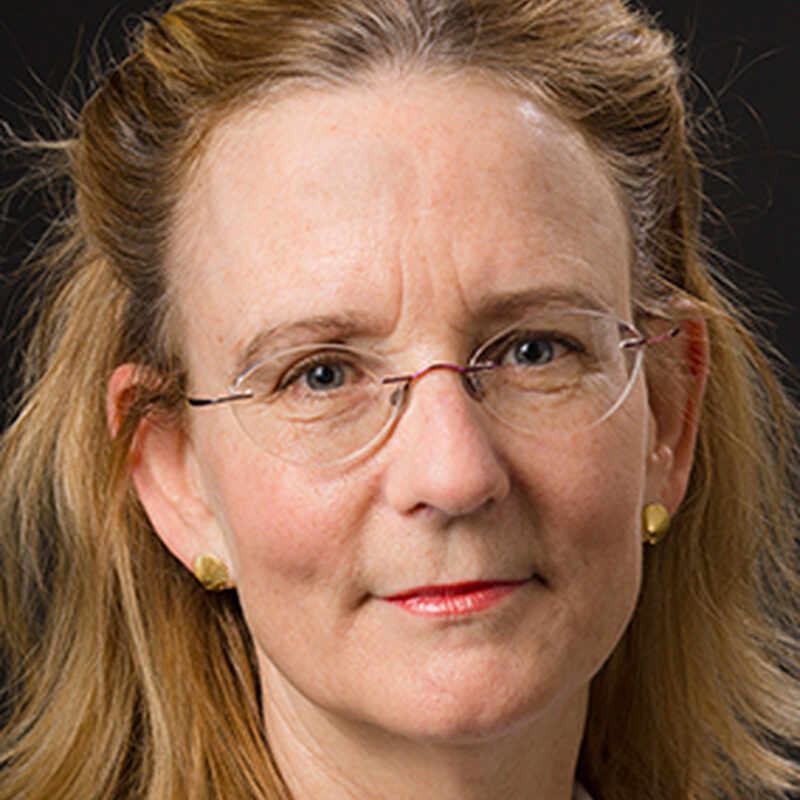
Welcome to TEDMED conversations. I’m Kelly Thomas, the director of scientific content at TEDMED. I’m joined today by Lisa Sanders.
Lisa, please share a little bit about your background and the exciting things that you’ve been working on since we last saw you for your TEDMED talk.
Well, lots has happened since then. After working over twenty years in primary care, I left that position at Yale to become the medical director of a clinic where we see patients who have long COVID, and that’s been extremely exciting.
So I would like to talk about your very intriguing background. It’s multifaceted. You have always been a detective by nature, first as a journalist now also as a physician.
What happened that led you to pursue medical school after you had already, established yourself as a journalist?
I saw something that changed my sense of the possibilities of the world. I was working with a a doctor, medical correspondent named Bob Arnott, on a show called forty eight hours on Crack Street. It was a long time ago. And we were standing we were at Metropolitan Hospital in the Bronx in New York City.
And it was three o’clock in the morning, and we were standing outside getting some air. We were in the ED just seeing what came in because that was the beginning of the crack epidemic. And a lot of patients were coming in with problems from smoking crack. So we were just standing outside and this guy walked up to us, ran up to us really and said, are you a doctor?
I looked at Bob, and he goes, yeah. I’m a doctor. He goes, my friend was having chest pain, and we were coming to the hospital, and he suddenly collapsed. And he’s I can’t get him up, and he’s lying in the grass over here.
So we ran off after him, and there was this guy, and Bob put his fingers on his carotid artery.
Nothing.
And so he looked at me and he said, I’m not licensed to practice medicine anymore.
And then he took both hands and thumped this guy on the chest really hard.
And almost immediately, he gasped for breath and opened his eyes.
I now know that he was probably in ventricular fibrillation and that a kind of sharp blow to the chest can shock the heart out of that. I didn’t know it at the time, but this guy who was dead came back to life.
And it occurred to me that I was never going to be able to save a life like that.
I didn’t I didn’t and, actually, up until that moment, I didn’t even know that was something that I cared about. I mean, it’s not like I didn’t know there were doctors. It’s just that I’d never thought about that with respect to what I could do.
And it just planted it in my mind, and it percolated there for a long time. It took me about another five or six years to think, oh, maybe I should go to medical school.
But it finally dawned on me. It sort of finally took roost in my brain in a meaningful way, and I thought maybe I should go to medical school. Maybe I should try to save people’s lives.
And it was a great decision. I’ve enjoyed every step of the way.
That’s an amazing story and an incredible transition. If you could have gone back in time and advised your younger self, would you have said something that would have caused you to realize that earlier in life?
No. Absolutely not. You know, the practice of medicine is something that is filled with uncertainty, and I could have never managed that uncertainty straight out of college. I just couldn’t have done it.
And it’s not just me. I mean, I think a lot of people who go straight through high school, college, medical school, residency, the real world, they also have trouble dealing with uncertainty. And so what you see is people going into teeny subspecialties where they feel like they can master everything that is known about something and never have to deal with uncertainty. Of course, that’s a false goal.
I mean, there’s always uncertainty.
Between the complexity of the body and the limitation of what we know now, there’s always gonna be a lot of uncertainty.
But it would not have felt comfortable to me right out of college. I really appreciated what I learned in my careers after college and before medical school. I think they helped me prepare for the doctor I wanted to be.
Lisa, you have an incredible love of writing, and you are working with the Yale internal medical residency writer’s workshop program. What prompted you to to join that program?
Well, you know, when I became a doctor, I recognized that the tools that journalists use and really the access to people’s private stories that journalists have is what doctors have. We use a lot of the same tools. And for a diagnosis to make sense, it has to sort of make stories sense in a in a strange way. The same way when you read a story and you feel like, oh, that didn’t work at all.
That doesn’t make any sense at all. That same sort of critical power comes into play when you’re making a diagnosis. And so to me, it seemed obvious or inevitable that doctors should be storytellers, should be writers. A lot of doctors come to medical school with maybe they wrote when they were in high school, maybe not, but with an interest in storytelling.
I mean, I think that’s one of the chief motivators for people to be interested in medicine as opposed to science. I mean, all of these things tell stories, but the kind of human stories that doctors tell, I think, draws a lot of people who might also be interested in telling stories in a different way. And so to me, the writer’s workshop is an opportunity to help people do that well.
I think we have a lot of stories to tell. So many of the most important issues that we look at as a country, as as a species, have to do with medicine. And I think that we doctors should be the experts. But in order to be the experts, we have to be able to get out there and and speak and tell these stories and write these stories. So to me, that was a very exciting opportunity. And I got to work with some great writers and, you know, and I feel like the world is now filled with writers that have passed through the Yale, Writers’ Workshop and are out writing and publishing and telling stories.
And that’s a great feeling.
That must feel incredibly rewarding.
And you’ve brought together so many meaningful experiences from your career as a physician and a journalist, and you continue to do great work.
And I’m curious to know what is next.
You know, I think my next goal is to get other doctors excited about this aspect of medicine, this postinfectious syndrome. I think that it hasn’t gotten the respect or the appreciation it really deserves. When I first said I was gonna go do this, there was a lot of, really?
And to be fair, a lot of these patients who have complicated syndromes or symptoms and lots of them, they don’t fit naturally into a primary care doctor’s schedule. You know, if you’re a primary care doctor and you have fifteen or twenty minutes to see a patient, when somebody comes in and tells you that they’re dizzy or their heart beats too fast or they’re tired all the time, you know, or all of the above.
Something in you can’t help but look at your watch and think, can I how much can I get done in the time I have available?
And so these patients make doctors frustrated in part because it shows up what’s wrong with our system. We have a system that has no wiggle room in it. We have no ability to make room for patients who are complicated.
So we just send them to subspecialists.
I think that this kind of marriage of complicated patients and people with broad knowledge like internists is an obvious match, but we need the space to do it in. So I wanna bring people into my clinic, show them how it works, and get them excited about these possibilities.
And I hope that just as we have these writers that go off and write, I wanna have internists who go off and start these clinics themselves because I think that there’s a need for it. And I think that it will save money, improve lives, and keep doctors interested. You know?
We’ve all been to the doctor who you think is not the least bit interested in your symptoms.
Somebody who sees something different every day like I do, that will never happen.
So so my next goal is to generate the next generation of people who do this kind of work.
I think that’s a very ambitious and important, goal to have, and I look forward to seeing where you take this new journey. Thank you so much for sitting down with TEDMED today to have this conversation. We appreciate it.
Well, thanks so much for inviting me. This has really been a great conversation. Thank you.