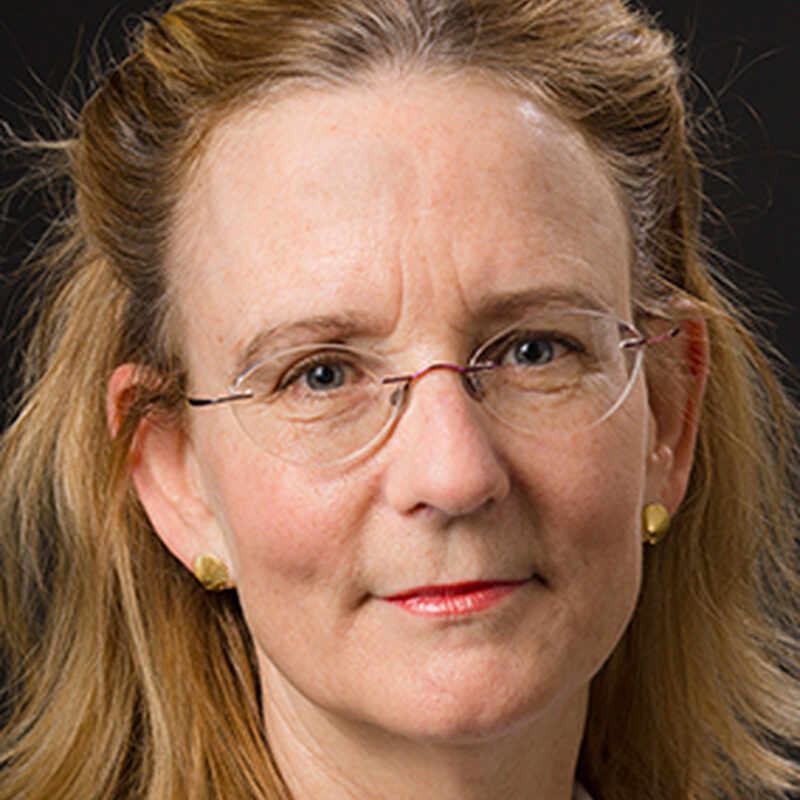
Welcome to TEDMED conversations. I’m Kelly Thomas, the director of scientific content at TEDMED. I’m joined today by Lisa Sanders.
Lisa, please share a little bit about your background and the exciting things that you’ve been working on since we last saw you for your TEDMED talk.
Well, lots has happened since then. After working over twenty years in primary care, I left that position at Yale to become the medical director of a clinic where we see patients who have long COVID, and that’s been extremely exciting.
How many clinics are there across the country?
We have a list of, you know, a couple of hundred, but a lot of those have closed down because people are so over COVID. COVID is not over us, but we are over COVID. And so people have feel like it’s not needed anymore. And I couldn’t disagree more. It’s not just COVID that causes these post infectious syndromes. You know, we know that Lyme disease can cause this kind of post infectious disorder.
Mono causes this long thing. And there are a whole bunch of other diseases. You know, I know of, you know, twenty or thirty that have this even the flu can have this long tail.
And there are a lot of people who go to their doctor and their doctor go, that was ages ago that you had the flu or mono. You should be better by now, but they’re not. And I think that a clinic that is focused on these long tails of infections is totally necessary.
We’ll see if if they survive.
Do you think that that concept, not just looking at the long tail of long COVID, but other diseases becoming, you know, more mainstream?
Yeah. And in fact, you know, Mount Sinai in New York City was one of the first long COVID clinics. They became a long COVID clinic the same way everybody got involved in long COVID. They took care of patients with COVID, and they didn’t get better.
And so at Mount Sinai, they, just a few months ago, changed the way they present themselves from being a long COVID clinic to being a post infectious syndrome clinic. And I think I mean, that’s just the one I know about off the top of my head. I’m sure that other clinics are going to do the same thing because this is fascinating stuff. This is how our immune system is working.
It’s such an insight into an area about which we know very little and yet which affects, you know, tens of thousands, hundreds of thousands, maybe millions of people. We don’t even know. There are lots of things that we’ve known about for a long time that turn out to probably be post infectious syndromes, like chronic fatigue syndrome, which is, you know, now known as myalgic encephalopathy chronic fatigue syndrome because I think people thought that chronic fatigue syndrome wasn’t being taken seriously enough. So there are a lot of illnesses that we now recognize to be part of this post infectious syndrome series of symptoms.
So I hope that we can move out from just COVID to all the illnesses that cause these kinds of symptoms.
This sounds like the start of a new specialty to me, Lisa.
Maybe a a future specialty that, you can pioneer at Yale.
We are, though, seeing a lot of new research papers coming out, really trying to dive into specific biomarkers or developments of blood tests. And do you think that’s possible and that can help the process for long COVID and maybe other, post infectious syndromes as well?
I think so. I mean, there have been a lot of candidates put out there things that, oh, look. We see this in people who have long COVID. And then they find out, oh, they’re actually in people who don’t have long COVID, which makes them a lot less useful. But I think that it’s inevitable that we’ll figure out some footprint for this disorder.
You know, I mean, there are already things that have been seen in patients who have long COVID. For example, a lot of patients who have long COVID have low cortisone, sort of one of the fight or flight hormones made by your adrenal glands.
But there are lots of things that cause low cortisol. So that’s not gonna be that’s not gonna be enough. But I think people will come up with markers with tests that can help us identify this.
Anyway, that’s my hope. And I think it seems very likely because there are a lot of smart people trying it, working on it. Mhmm. And that’s a good sign.
Absolutely.
Alisa, you are definitely a natural storyteller.
And if long COVID has a story, what do you think the next chapter is?
I think that what we’ve been talking about is the next chapter of long COVID, that we’re gonna see the relationship.
First of all, that we’re gonna see we’re gonna figure out how this all works, you know, how an infection can change our bodies so these symptoms continue long after all the bugs are gone.
And I also think that we’re going to expand beyond COVID to all the other illnesses that can cause these long post infectious syndromes. So that’s what I see as the next chapter. First, we’re gonna have a better grip on long COVID, and then we’re going to spread our interest to all the other causes of postinfectious syndromes.
I look forward to seeing this unfold, and, we at TEDMED are incredibly grateful for the very important work you’re doing at Yale and elsewhere.
Thanks.
You’re welcome. Thank you so much for sitting down with TEDMED today to have this conversation. We appreciate it.
Well, thanks so much for inviting me. This has really been a great conversation. Thank you.