


Skip to content
All TEDMED Content

Successful product design

Related Playlist:

Listen On

About this Conversation

Product design, especially when it relates to the delivery of medicine, is a complicated process. Sometimes the design is a success–widely accepted and seamlessly integrated into people’s lives. Sometimes product design falls short–observations around current trends and reactions to past products may not have been considered. In this TEDMED Conversation, Heidi Larson, MA, PhD, Professor of Anthropology & Risk, and Marc Koska, OBE, Co-Founder of Apiject, discuss why anthropological observations play a critical role in product design and delivery.
Watch related Playlist:
   • Novel approaches to therapeutics  

We discuss:
-Top lessons learned from the pandemic -Paying more attention to anthropological observations -Accounting for human factors in design Related research & resources: -Five Qualitative Research Concepts Grounded in Anthropological Methods for Teaching Design in Healthcare. Healthcare. 2022; 10(2):360. https://www.mdpi.com/2227-9032/10/2/360 -The anthropology of health systems: A history and review, Social Science & Medicine. 2022. https://doi.org/10.1016/j.socscimed.2… -Stuck: How Vaccine Rumors Start – and Why They Don’t Go Away. https://www.amazon.com/Stuck-Vaccine-…

About Heidi Larson

See more
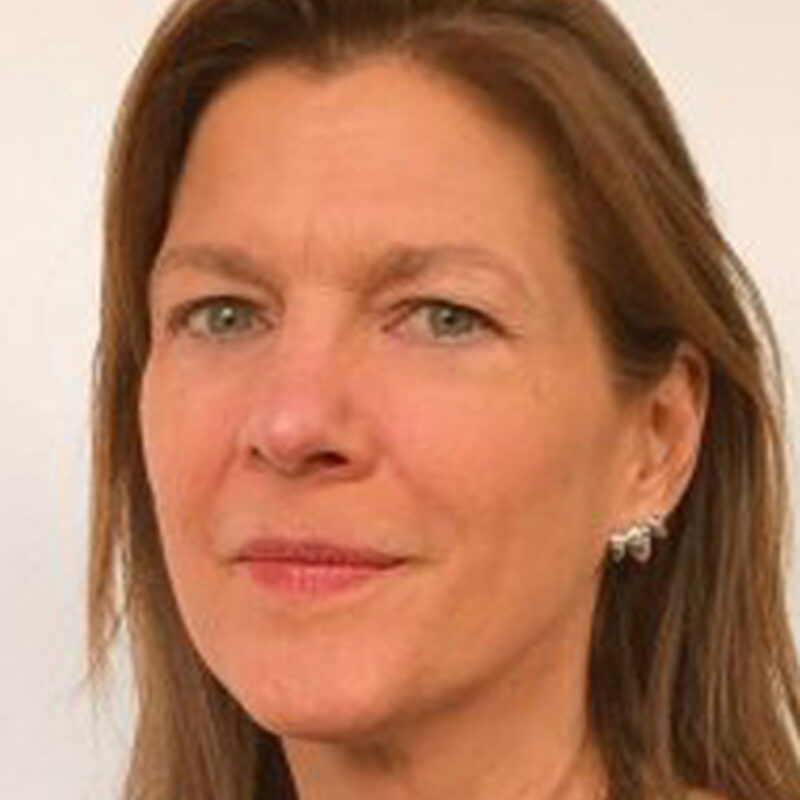
About Heidi

Dr. Heidi Larson is a leading anthropologist and an internationally recognized expert on vaccine confidence and public trust. She is best known as the founder and director of The Vaccine Confidence Project at the London School of Hygiene & Tropical Medicine. This project focuses on understanding and addressing the social and political reasons why people may hesitate to accept vaccines. Her research involves analyzing how rumors, misinformation, and the beliefs of the public impact the success of health programs and policies. Heidi’s work is crucial for managing health crises and ensuring that vaccines and other medical interventions are trusted by the public, from the earliest stages of clinical trials all the way to their delivery. Throughout her career, Heidi has held influential roles at major global health organizations. She previously led Global Immunisation Communication at UNICEF and chaired a task force for GAVI, the Vaccine Alliance. Her expertise has also been sought by the World Health Organization (WHO) and the U.S. Food and Drug Administration (FDA). She currently holds academic positions at the London School of Hygiene & Tropical Medicine and the University of Washington, where she continues her vital work on public health and risk communication.

About Marc Koska

See more

Marc Koska, inventor of a life-saving syringe, shares the struggles, setbacks, breakthroughs and ultimate triumphs of this technology’s 30-year odyssey from ‘great idea” to “globally adopted reality.”

If I had lived in the Middle Ages, I would have wanted to be the guy who killed all the rats in the Black Death.

Marc Koska

About Marc 

In 1984, Marc Koska was aimlessly traveling the world when he stumbled upon a newspaper article predicting the spread of HIV through the re-use of medical syringes. For Marc, the article was a game changer, igniting his interest in global public health and catalyzing his invention of the Auto Disable syringe that breaks following use. Three decades later, Marc and his syringe have been credited with saving more than nine million lives, and his invention is licensed by 14 global manufacturers. Marc’s energy is now focused on implementing injection safety practices in every corner of the world with his nonprofit organization, SafePoint Trust. In February 2015, the WHO called for a worldwide adoption of these “smart” syringes. For his tireless work, he has been awarded Officer of the British Empire, among numerous other honors.

Take action

Watch out for the Safepoint Pledge – to ensure enough manufacturers work hard enough on capacity, to enable us to beat the WHO’s 2020 deadline for achieving universal needle safety.

Make sure your doctor, wherever you are, opens a fresh packet, uses a needle and syringe once, and disposes of correctly.

Ask for a LifeSaver syringe every time

My name is Mark Kosker. I’m the cofounder of AppyJect, and my work revolves around innovating new packaging and delivery methods for injectable medicine.

I’m Heidi Larson, and I’m a professor of anthropology and risk and primarily working on health and increasingly health and climate.

I’d like to ask you a question, and, of course, it could be a one hour answer, but it just in a few sentences. What were the the top level things that you observed and learned from the pandemic?

I think the most important thing that I learned from people around the world about their experiences during COVID is the importance of making guidance or products or whatever the issue is relevant to their lives. A lot of them would have been on board in on a lot with whether it’s vaccines or masking or lockdown or homeschooling or contact tracing or whatever it was.

They didn’t have any particular issue with it. The issue was they couldn’t figure out how it was gonna fit in their life, and they just needed a little help with that.

Should product design pay more attention to anthropology observations anthropological observations?

Because you must see a lot of design efforts coming into the market to try and sell and deliver and and, you know, implement more drug benefits. But you probably look at them and go, gosh. If only they hadn’t made it shaped like that or that color or whatever. I mean, do you do you see a lot of that?

I think that the more we can try to integrate people’s experiences and views and get kind of popular input into the design features.

My experience with working with different product developers or design features is that they’re often driven by what’s technologically possible more than what’s actually appropriate or relevant to certain settings. The challenge is if you try to go to scale, you can’t accommodate a lot of different settings.

So, I mean, you know, do you think that designers don’t pay enough attention to, you know, market observations from, you know, people such as yourself, anthropologists who sort of have very in-depth knowledge about the marketplace because, you know, often, products are hindered by manufacturing techniques and by costs. Because we’re always trying to put as many features in as possible. I mean, my experience, they do get reduced when you come down to the bottom line of cost. But what what what better way could we work together?

Well, I think in my experience and this is changing. I mean, the field is changing, and and, I mean, the technology and and manufacturing field has seems to have increasingly recognized that the end user environment context matters. But I think it’s really important to bring anthropology early in the design phase because not even to to tailor it to a specific setting, but I think there are questions that as an anthropologist, you might ask and think about someone who’s really focused on what’s technologically possible might not be thinking about.

And so I think those kind of conversations, the more upstream they can be, the better.

No. I agree. I think that that is an essential part of getting feedback. And, also, you know, the designers, in my experience, the designers just don’t spend enough time in the field having their own observations either. Yeah.

They’re not Especially in larger companies, they don’t have that privilege.

It seems to me as though they are, you know, under a schedule from, you know, the management who’ve said we need four new products this year, and, one has to be a raving success.

And and they’re just sort of designing into vacuums. They’re not really designing for, you know, total need. The other problem we find is that standards are written very much from, let’s say, an ivory tower viewpoint.

You know, standards can sometimes be a big hindrance to you know, perfection is the enemy of the good, if you like. And so standards are written, which although I understand the reason for them and I’ve been involved in them, they do hinder that sort of freedom of innovation and and trying new things.

Yeah. I think, actually, that concern has come up a lot in some of the recent discussions around even AI and and the whole GPT technology is, wait a minute. If you slap down the standards too strong too early, you might lose some of the opportunity. On the other hand, it’s trying to know where the where the balance is. But I I think your point that in in big companies in particular, where designers are under, like, a heavy schedule, like, you’ve gotta have, as you said, four products for great success in x amount of time. Well, the irony is that really, if you want that great success, you might have to take just a little longer or make it three products and and use the time for the fourth to really, you know, roll your sleeves up and understand will it help you know, will this be a success a success? Because real success needs to understand, you know, where where the product’s gonna land.

So what I also think is is odd. You know, good design should take into account, you know, observations from the field, behavior, patterns, and reactions to past products. And it’s almost seems like an unnecessary step to do human factors testing. Designers really should have ironed those big go, no go results that you can get from human factors out before they even put it to that sort of test.

And I think I agree with you that the more anthropologically based observations we build into the design brief and therefore the design itself, along with, you know, manufacturing and cost and and compliance and and whatever regulations for safety.

You know, we should get to a point where the product sales through human factors. It seems seems to be rejected at that point, which, of course, you hear about all the time. It shouldn’t come up if we had done our job, you know, better.

Alright. So, Heidi, I I believe that we are actually with the work that we’re doing, especially opening up whole new horizons where we’re gonna be able to target delivery that is much more relevant to the patient.

So I’m glad you said what you just said because I think, we’ve we’ve learned that lesson, to a degree. We’re gonna keep our eyes open, and we’re gonna deliver better and better designs to the market. And I’m very, very pleased with your your comments. What are your what are your views on, the future, and what can we look forward to?

Well, I think we have to have a lot of hope. It’s not an easy time to have hope. There’s a lot of things going on in the world that can be pretty concerning. We’ve got we still are not over COVID and the fallout of COVID. We’re just discovering more and more things that COVID and and the COVID response have the knock on effect.

But I think we’ve also learned a lot. And I think that some of the innovation that came out of COVID and the COVID response, in our recent research with people around the world about their experiences, I have to say across the multiple questions we asked about how they coped and what were the the difficult things and what were the the positive things, the thing that actually people were most positive about was how technology helped them.

It was really interesting. Different other aspects of coping were had their problems, but somehow technology. So I think there’s I have a lot of hope in the possibilities.

I, and I think we have to embrace that without being too naive about the risks of these things. I mean, I’m, an anthropologist who is focused on risk and decision science.

So I’m constantly looking at risk, but hope has been a huge, huge lever. And I, I have a lot of hope, not naively, as I said, but the important thing is that we embrace and build on the good stuff that happened in the last few years.

That’s fascinating. That really is. Well, Heidi, thank you very much. That was, great to catch up with you.

Great to see you too.

Recently Viewed