Welcome to TEDMED conversations.
I’m Kelly Thomas, the director of scientific content at TEDMED.
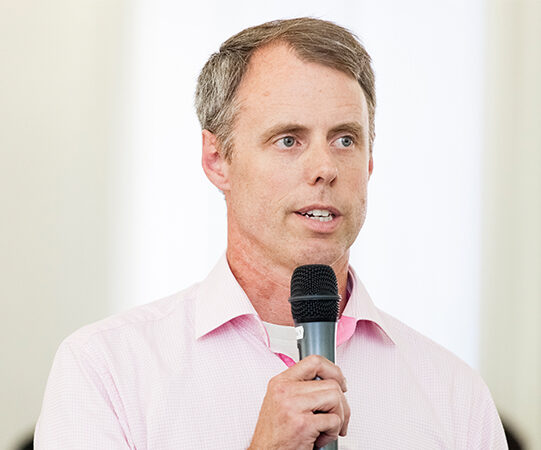
I’m joined today by Ed Kelly. Ed, thank you for taking the time to have this conversation with us, and I am going to allow you to introduce yourself.
Hi. Kelly, good to see you today.
And my name is Ed Kelly. The I’m the chief global health officer for ApiJEC and previously served with the World Health Organization, the Department of Health and Human Services for the US government, and also USAID, for the state department.
Thanks for being here, Ed.
So I will just get into some questions.
What do you think are the ongoing effects of COVID on the rest of global health, particularly global immunizations against other illnesses?
Mhmm. Yeah. Great, point. Probably if I were picking out the biggest area that everyone’s worried about, it is in in routine immunization. There was a massive interruption in in routine immunization for for kids, partially because of the strain on the immunization, systems around the world because they had to everyone dropped everything and focused on COVID immunization once we actually had vaccines.
And secondly, people just stayed away from the health facility. So that was two, three, four years, and, UNICEF just published with WHO its annual state of the world’s children. It’s a great story of, what’s happening with kids, around the world. And sixty five million children, the biggest ever in the history of vaccination, have missed out on vaccinations over the past, three years.
And that means because we’re now we have a cohort of kids that have missed basic vaccinations, and they’re about to pass out of that vaccination period, which is, like, between, zero to five years, but really two to five years. And and then once they pass out of that vaccination time, we’re very likely to lose them forever, meaning that the clock is ticking on us getting out there and reaching those kids before we lose them forever and we have outbreaks, in adolescents and and older people, for decades to come. So that that’s the I think that’s the biggest, effect of that COVID has had on on global health, in the coming period and the the big worry that people are talking about in global health, arena.
That’s a pretty terrifying number to to overcome. Do you think it’s even possible to close the gap in childhood immunizations and and really start immediately considering the window will close within a certain number of years?
I think it is the key to to catching up on that. So it’s an agenda for the US, agenda for Europe, but particularly an agenda for the developing, world, will really be taking immunization out of the clinic. You have to go to where people live, work, go to school, etcetera. That’s, and the other thing to to mention, you know, for COVID vaccinations, it’s going to be linked with, with the influenza vaccinations.
And whenever we’ve done a good job on on vaccinating adults and, we’ve actually gone out to meet them, where they live and work, but the same will be true of kids and and catching up on this. So this will mean we’ll have to find ways of of, taking, immunization out of the clinic, putting vaccinations in the hands of community health workers. There are about twenty plus countries around the world that are that are trying out programs, for having community health workers. And for context, these are, yeah, relatively minimally trained, health workers.
These people live in the community where they where they come from. So they’re trusted. They’re the first point of contact with the formal health care system. And I think that’s really the only way we’re gonna we’re going to make that, catch up if if we’re going to make progress, on this.
We’ve gotta get out there to the where they live, where they work, where they go to school, and and reach them with immunization.
And to me, this seems like, something that really needs to be a coordinated global health effort. Is this something that the World Health Organization or UNICEF spearheads, or is there a a a group that can help push this forward?
Yeah. There, the there is a an a set of actors that are have worked for, the past decade and a half on immunization, and, they all come behind this one document called the immunization agenda twenty thirty, IA twenty thirty. Of course, it has an acronym. And those include WHO.
It includes UNICEF.
It also includes private, foundations like the Gates Foundation is a huge funder for vaccination, but it also includes, donor, quote, unquote, donor countries, countries that that provide funding for these types of things like the US government, like the British government, like France, Germany, other places. And a lot of it, of that funding and some of its coordination comes through an organization called Gavi, and they are just getting new leadership. The individual by the name of Mohammed Tate, who, I know from a long time, He’s known within the global health community. He was former minister of health in Nigeria where he really spearheaded this integration of immunization with primary health care. So I think a lot of people have hope that he’s the right person for the job. He is inheriting the biggest gap in immunization in history, so he’s gonna have to have, a lot of help.
But I think, everyone is very, very focused on this as a as a massive, public health, problem that that needs concerted actions.
Well, that’s good to hear that there are people really diligently working on this and, hope they continue to move forward. And I just wanna say thank you so much for sitting down with us for this conversation, and we look forward to seeing you again soon.
Thank you so much, Kelly. It’s a pleasure to be with the TEDMED team, and look forward to our next conversation.