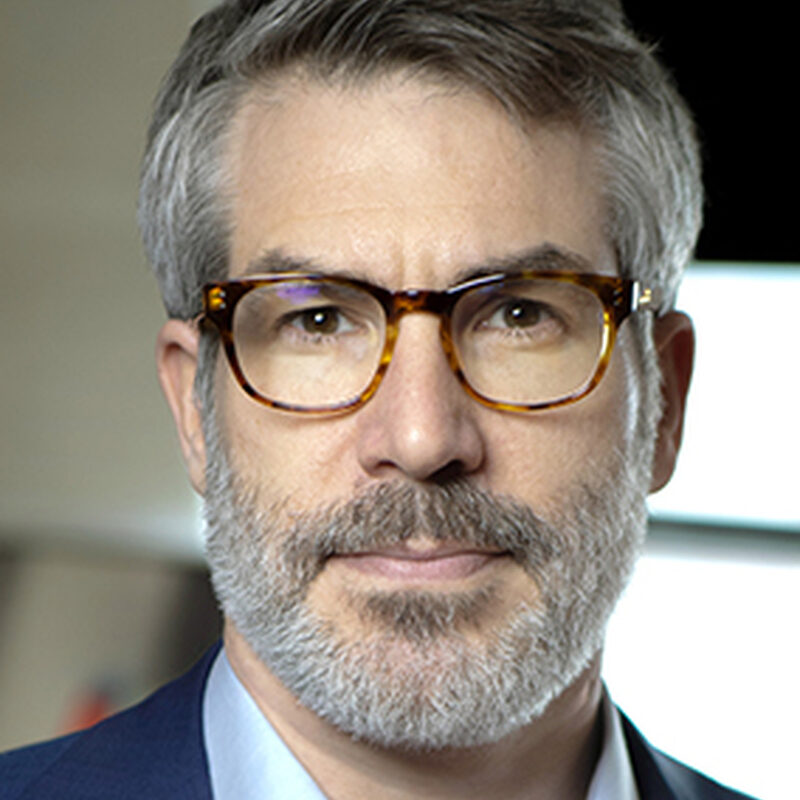
Welcome to TEDMED conversations. I’m Kelly Thomas. I’m joined today by Thomas Act, the founding director of the Center for the Study and Practice of Violence Reduction and an associate professor in criminology and criminal justice at the University of Maryland.
His work focuses on studying, teaching, and advising on implementing evidence informed strategies to reduce community violence here and abroad. Thank you for chatting with TEDMED today, Thomas.
Yeah. It’s a pleasure to be here.
So community violence is only one type of violence on a continuum. How would you describe it, and what led you during your career to focus on this particular type of violence?
Sure. Community violence, meaning violence that happens in community settings, I. E. Public settings, the streets of our most disadvantaged urban communities.
It’s known by many things. Sometimes it’s called urban violence. It can be called street violence. It has connections to gang violence, youth violence, gun violence, of course.
But community violence is the term that I think summarizes all of those things is the best umbrella term for it. And community violence is the form of violence that causes most homicides in the US today, probably in excess of sixty to seventy percent of all homicides in the United States are associated with community violence. I’ve been working on this issue in one capacity or another for most of my professional life as a high school teacher, as a prosecutor, as a political official, and finally as a academic and policy analyst.
And what have you found through your research that works to help reduce community violence?
Sure. I think when you engage with the literature in this area in a systematic way, as myself and my colleagues have. We’ve performed a systematic meta review of community violence reduction strategies. We did the first one in twenty sixteen. We’re finishing up our latest version of that, which will be probably released later this year. When you systematically look at not just one or a few, but well over a hundred systematic reviews encapsulating, you know, more than a thousand quasi experimental and experimental studies, there are some common themes about what is most effective in reducing violence. Generally speaking, the most focused interventions are the most successful.
Generally speaking, the most balanced interventions or having a balance of interventions is also associated with effectiveness. And finally, paying attention to the fairness and legitimacy of these antiviolence interventions is critical.
And so when you look at these three key elements, focus, balance, and fairness, you know, these things really reflect the nature of community gun violence. Community gun violence is not spread evenly in the United States. It’s actually hyper concentrated among small groups of people and small micro locations known as hot spots in many of our most disadvantaged communities and cities.
We know that human beings respond to both punishments and rewards, positive and negative sanctions, and the literature reflects that. And then finally, no one can ignore the sort of crisis of confidence that we’ve seen in the United States in the criminal justice system over the past few years. And if you’re going to reduce violence sustainably, you need to have the consent of those who are most impacted, and they need to perceive what you’re doing as fair and legitimate.
Mhmm. Even though this type of violence is really in specific hot spots, I imagine that it does affect the whole community surrounding it. And in what ways do you see it affecting that larger community? And does a larger community in the situations where you’ve already worked in cities in the US readily want to help and get involved in a action plan to to kind of reduce this type of violence?
It’s a great question. I think I’ll answer in order. So this violence is disproportionately concentrated amongst certain groups of people in places, but we all pay for a very steep price for community violence. We pay for it in terms of increased taxes, raised insurance premiums, diminished property costs, reduced economic activity and investment.
All of these things impact communities at large. But I think, you know, one of the things that we see with chronic exposure to violence is that it affects potentially disadvantaged children most of all. Chronic exposure to violence, there’s a well documented literature about ACEs, that discuss adverse childhood experiences, that discuss when children are chronically exposed to violence, they have more trouble sleeping, focusing, paying attention. All of these things ultimately result in extended poor performance in school.
Not because these kids are any less smart, but because their minds are actually occupied with processing this exposure to violence. And when that goes on for long enough time, that educational disadvantage, that negative impact on education is substantial enough that it can impact their ability to get a job that might get them out of poverty. And so chronic exposure to violence is actually one of the key mechanisms that keeps poor kids poor. And to answer the second part of your question, in cities that have very high rates of violence and in particular community gun violence, places like Saint Louis, Baltimore, New Orleans, no one has to tell residents in those cities that this is a serious problem.
They understand it. They’re trying to grapple with it. They do better or worse. But there is a understanding that this is really not just impacting the people who are directly impacted, but it’s in impacting the social quality of life and the economic livelihood of these entire cities.
But I think in cities that have lower rates but still significant rates, sometimes it is hard to get the consensus that this is a really important top issue.
Mhmm. You and your colleagues have already worked together in a few cities to put plans into action to try to develop and sustain community violence reduction.
Where have you had success so far and what were the critical components to achieving success in those places?
Sure. So the VRC, also known as the Violence Reduction Center or the Center for the Study and Practice of Violence Reduction, as you said in the introduction, we are working currently with three cities, Knoxville, Boston, and the St. Louis region. And we’re very fortunate to have very strong initial results.
Last year, Knoxville saw a homicide reduction of thirty three percent compared to the year before.
That beats the national average by a sort of factor of three to one. National average was about ten percent reduction in twenty twenty three.
Boston, where we started working during that year, had a modest reduction in twenty twenty three. But this year, they have had a remarkable run. They’ve had only three homicides the entire year in twenty twenty four so far. That’s over eighty percent reduction in homicides in Boston.
We’ve just started working in Saint Louis, so it’s too soon to tell, but we have a great sort of committee. We had our first advisory board meeting. We have the full support of the mayor, the county executive in Saint Louis County, and Saint Clair counties, and we’re really piling a new regional approach to the issue. So so far, our progress is quite strong.
Mhmm. That’s great to hear. And it sounds like there are many different groups that need to be involved to put a plan into action. What does that look like? Which community groups are involved in the entire process?
So, you know, one of the things that the VRC does, which is especially challenging in our current hyperpolarized sort of political era, is we insist on bringing different groups together, and we insist on them working together.
So we insist when we pull these cities together and put together a common plan under the leadership of the mayor or key city leaders, because we only work through key leaders. You know? The VRC can’t be successful without great people on the ground.
With their guidance and support and leadership, we pull together coalitions that draw from law enforcement, that draw from public health, that draw from community based groups and also the business community and the faith based community.
And we sort of put everybody in one room and sort of insist that they learn together about the latest science of violence reduction. And that science really sort of socializes them into understanding that, yes, we are gonna need sanctions for these highest risk individuals if they continue to harm the community by engaging in violence. But at the same time, we need supports and treatment and things to say yes to as well as to say no to.
When you’re working with the people that are committing this type of violence, is there a level of trust that needs to be developed for them to trust the relationship between the community leaders or the law enforcement agents that if they do stop, they will be able to get the help that’s been offered?
It’s a great question, and I’m smiling because it comes up a lot. And I really think that trust is not given. It’s earned over time.
And one of the things that I have learned in this work, which I’ve been doing in one capacity or another for a couple of decades now, is that you can’t wait until everyone trusts and likes and respects each other to get going. What you need to do is say, we may not trust each other. We may not like each other, but we’re willing to work together because we share a higher purpose, which is saving lives by stopping violence. And what I’ve seen in jurisdiction after jurisdiction is that the trust comes later. The trust is earned over time through working together with unconventional partners who you might not like particularly initially. But over time, you come to learn more about them and ultimately respect them.
Mhmm. Has that been one of the largest hurdles in putting your research into practice, having people agree to work together? Are there other hurdles that you’ve had to overcome through these different processes?
Well, I think that the VRC has a very strong selection effect. And what I mean by that is we only work with cities where we have done some homework. We’ve spoken with a lot of the key stakeholders, most importantly, the mayor, and there’s already an appetite for this type of collaborative approach.
And they recognize that they might have to do things a little bit differently in order to get better results. So we’re not going into completely unfriendly environments and trying to turn people around. I’ve had a lot of experience working in government at the federal and state level. And in those capacities, I tried to encourage cities to do things often, and I didn’t always have success. Now as the head of a small center, I have to be humble about my ability to influence these cities. And so we go where we’re wanted. And so, you know, the appetite for the work is already there.
Mhmm.
What led to the founding of the VRC? I know you mentioned that it is fairly new. Was there a specific event, or is this something that you’ve been working on in the background for a while before it opened?
You know, I think it’s interesting. I think that the VRC, in some ways, is a natural culmination of a lot of my work in this area. I’ve worked through government. I’ve worked in academia, and I wanted a platform where I could continue this work, where I could both do research and also have a practical impact, and where I could translate the lessons that I’ve tried to teach through my TEDMED talk, through my book Bleeding Out, and through my work with the Council on Criminal Justice and other places.
And the VRC is a home to sort of distill all of that down into its purest element, which is how can we save lives by stopping violence using science?
Just to go back to Boston and the great success you’ve had this year with only three homicides so far, was there something different or unusual in your plan in Boston versus other cities that you’re working in? And can you take what you’ve learned in Boston and then apply it to your current and future projects?
That’s another good question. The answer is not necessarily because the VRC is really building on a lot of preexisting strengths in the Boston region. And I don’t wanna oversell the VRCs impact. I think it’s important to note that Boston was already doing well and had a strong history of violence reduction before the VRC started engaging.
And if anything, I think the VRC sort of supercharged work that was already going on and made it a little bit better. And that is a limiting factor in terms of how replicable this success is. Not every city has the capacity that Boston has. Every city that we work in, we believe can have great success.
But it takes, you know, years, maybe decades to build up the capacity that Boston has to have so few homicides over an extended period of time. Sometimes you’re gonna have spikes in homicides and sometimes you’re gonna have gaps. And my answer is always the same. When violence is going up, I say, look.
We have to work the plan. We have to persevere. We have to keep moving forward. When violence is down, we have to work the plan.
We have to per se persevere. We have to keep moving forward.
Mhmm. Once you do see a reduction in violence, does the plan evolve, or is there a different plan that’s put into place to maintain the progress that’s already been made?
Well, I think sustainability is key, and we recommend that every city put together sustainability structures in order to make sure the work keeps going. We generally have sort of an operational team that’s small and nimble and meeting all the time. And then we generally have some type of leadership or advisory committee that’s larger, more high level in terms of political leadership and is supervising the work on a less frequent basis. And so we do have structures in place to sustain the work.
You know, the VRC is new. These plans are new. They’ve only been in place a year and change in these jurisdictions. So there’s no need to depart from the plans yet, but all of these plans need to evolve over time.
But I think the issue is that they need to evolve. They don’t need to be completely put aside and start. And you need to be true again as you evolve to these core anti violence principles, focus, balance, and fairness.
Mhmm. Absolutely.
And now you’re you’ve just recently started in Saint Louis. What else is on the docket for your next steps with the VRC? Anything you’re excited and looking forward to?
Well, with continued support, we hope to add cities. We hope to continue to do research.
We publish and produce systematic reviews of anti violence strategies. We compile in a rigorous and transparent way the most rigorous evidence on violence reduction, so we can use that to help cities make the right decisions in terms of their strategies.
So we’ll continue to produce that type of important policy relevant research.
We’ll continue to do small convenings on issues of strategic significance to the field. I think that we hope to, over time, by growing modestly and staying true to our mission, have an increasingly powerful national effect. But it’s quality over quantity. And so, ultimately, we’re gonna need to grow slowly in order to be most successful.
Mhmm. Thomas, can you go into some more detail about your three pronged strategy for violence reduction?
Sure. As I said, there are three core principles to violence reduction. The first is focus, the second is balance, and the third is fairness.
What do I mean by focus?
We know that in city after city, violence is sticky, meaning it clusters together among small groups of people and places.
And so the strategies that are most successful are sticky themselves. They’re highly focused on the people and places that matter most. So that’s the first principle. The second principle is balance.
You need a strategy that maximizes human behavior change, and human beings respond to both punishments and rewards.
And so in order to be effective, you need a set of strategies that includes sanctions, like the threat of arrest, the threat of prosecution or incarceration, but you also need supports, treatments, opportunities to give people potential rewards for changing their lives for the better. So that’s the second principle of balance. And then the third principle is if you wanna have sustainable success in this area, you have to have the support of the most impacted communities.
And people in those communities need to believe that your work is both legitimate and fair. And we’ve seen massive surges in violence in the aftermath of highly publicized incidents of police violence, where communities did not believe that they were being treated fairly and legitimately, places like most recently Memphis, Also, of course, Minneapolis and Ferguson, Missouri.
When the community doesn’t feel that there is a sense of fairness, is there a way to begin to repair that relationship?
Well, there is. Unfortunately, there’s not a lot of science on this subject, and researchers have really only recently begun to delve into how do you build back legitimacy and fairness once it’s been lost. There is a very promising area, and that’s called procedural justice or procedural fairness. And what that body of research tells us is that when people believe that the process by which authority is exercised over them is fair, they will accept the results of that process even if the results are not necessarily favorable to them in that incident.
And so one of the things that we’ve seen is that if we create processes that are transparent, people understand why things are happening, that are inclusive, that people are included in decision making, the decision making is fair, and they have a voice in how decisions are made, then they’re more likely to trust those processes, and trust can be built back slowly. We’ve seen it in policing. We’ve seen it in courts. And so that is one of the most promising areas in terms of building legitimacy.
Mhmm. Thomas, you’ve had a very interesting career and had many different roles throughout your career. How did you end where you are now founding the VRC and also teaching at the University of Maryland?
Sure. I’m not sure even I understand it. But I think it began in law school where I had an opportunity while I was in law school to teach in a volunteer capacity at a local high school. It was a high school that was in a high crime neighborhood and, had a lot of challenges. But I really enjoyed the work, and got close to a bunch of the students. But, unfortunately, after classes were over, one of my favorite students was murdered.
And so that was perhaps one of my sort of first exposures to this issue. After law school, I became a prosecutor at the Manhattan DA’s office and was involved in prosecuting all different kinds of violent crime. And I believe, then and I do now that prosecution and enforcement serves a very important purpose. But at the time, I kept asking myself these questions, which is, you know, how did we get here?
And could anything have been done earlier to avoid this terrible tragedy and now, you know, the punishment that has to be dispensed in order to see that justice is done.
And from there, I spent some time in corporate law. I didn’t like that very much, so I was able to get involved in a political campaign. We worked to protect voting rights in battleground states. And after that, I had an opportunity to move into the justice department.
And there, I started to transition into policy and really learn about all aspects of criminal justice policy. But in particular, I was responsible for managing a White House initiative called the National Forum on Youth Violence Prevention. From there, I went to become head of public safety for New York State. I spearheaded another statewide anti violence initiative.
So by the time I left government and went to Harvard to do some teaching and some writing, I had some pretty extensive practical governmental experience in reducing violence, and that’s informed my academic work leading up to now. Mhmm.
Well, your wide breadth of experience definitely helps with what you’re working on now, and you’ve seen so many different facets and from different positions, which is really exciting. And why do you have hope that we will continue to see success in reducing community violence across US cities and, potentially abroad?
Well, I think that, you know, most recently, there’s cause for hope in that after a historically large increase in homicide rates during the pandemic, we’ve seen substantial declines last year and this year. And I’d like to think that the work of the VRC and countless other organizations is a small part of that. And so I think, you know, just looking at the last few years, there’s been some real cause for optimism.
But also, if you step back and look at the broad course of human history, we have evolved from extremely violent societies, primitive societies, where violence was used with enormous frequency to slowly over years and years and years in very uneven process, have weaned ourselves off of violence progressively bit by bit by bit. If you will look at the work of Steven Pinker, he shows that despite the horrors of genocide and massive conflicts in the early twentieth century, that we are actually seeing, a massive decline over thousands of years in violent death. And so my work and the work of others is part of this, you know, millennia long civilizing process where, you know, we’re trying to appeal to, as Pinker says, our better agents.
That is hopeful that we are moving in the right direction, and we at TEDMED are very grateful for the work that you’re doing with the VRC and other agencies as well. Thank you so much for sitting down with TEDMED today.
It’s a pleasure. Thank you.