


Skip to content

What is resilience made of?

Related Talks:
Related Playlist:
Surprise Me

Listen On

Apple Podcasts

Spotify

About TEDMED Now

What if resilience isn’t something you either have or you don’t?

In the season finale of TEDMED Now, Kelly Thomas returns to the stories of Diana Nyad, Sian Beilock, Judson Brewer, A.J. Jacobs, and Kate Bowler to ask what they reveal when we put them side by side.

Across endurance, pressure, habit, joy, illness, and loss, a larger picture emerges: resilience is not one quality or one response to adversity. It is a set of capacities the brain and body can continue to learn throughout life.

Through practice, attention, reward, meaning, and connection, this episode explores how our expectations can change, how old patterns can loosen, why joy helps sustain us, and why some things are carried rather than solved. The result is a different way of thinking about resilience, not as something we prove in a single defining moment, but as something built through the small choices and relationships that help us adapt to what comes next.

About Kelly Thomas

See more
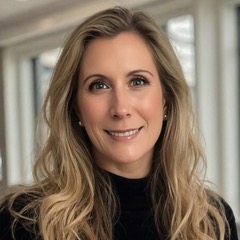
Kelly Thomas, PhD is Director of Scientific Content at TEDMED, where she curates and translates breakthrough ideas at the intersection of science, medicine, and human potential. Her work focuses on making complex research clear, accurate, and meaningful — connecting rigorous evidence to the realities of everyday life.

With a background spanning biomedical engineering, structural biology, oncology, and the biology of the stem-cell niche in acute myeloid leukemia, Kelly has written across formats ranging from peer-reviewed research and grant proposals to health and wellness journalism. Throughout her career, she has been driven by a central question: how do we translate the best of science into longer, healthier, more meaningful lives?

At TEDMED, she leads the development of conversations and experiences designed to surface nuance, challenge assumptions, and make emerging science accessible without oversimplifying it. As one of the hosts of TEDMED Conversations, she explores topics including resilience, mental health, technology’s impact on youth, and the future of care.

A lifelong athlete and high-performance competitor, Kelly brings a particular interest in the neuroscience of resilience and behavior change — and how science can inform the way we live, train, recover, and grow.

About Diana Nyad

See more
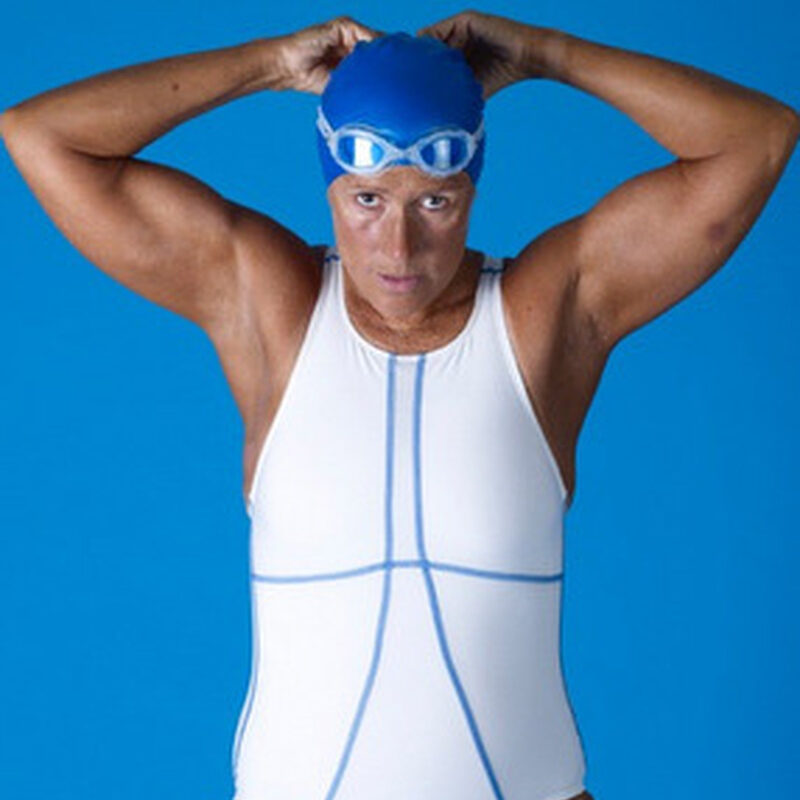
Diana Nyad is an endurance athlete, journalist, and author best known for completing the 110-mile open-water swim from Havana, Cuba, to Key West, Florida at age 64. After four failed attempts spanning more than three decades, she became the first person to make the crossing without a protective shark cage, swimming for nearly 53 hours through the Gulf Stream.

Long before the Cuba swim, Diana had established herself as a record-setting long-distance swimmer, including a 28-mile circumnavigation of Manhattan and a 102-mile swim from the Bahamas to Florida. She later built a distinguished career in sports broadcasting and journalism, covering major global sporting events and interviewing some of the world’s most accomplished athletes.

Her return to the Cuba swim after decades away from competitive endurance sport became a defining moment not only in athletics, but in the broader conversation about aging, resilience, and the pursuit of unfinished dreams. Since completing the crossing in 2013, she has written the memoir Find a Way, performed a one-woman stage show, and continues to speak about preparation, persistence, and the role of team in achieving ambitious goals.

Her story was adapted into the 2023 film Nyad, introducing her journey to a new generation.

About Sian Leah Beilock

See more
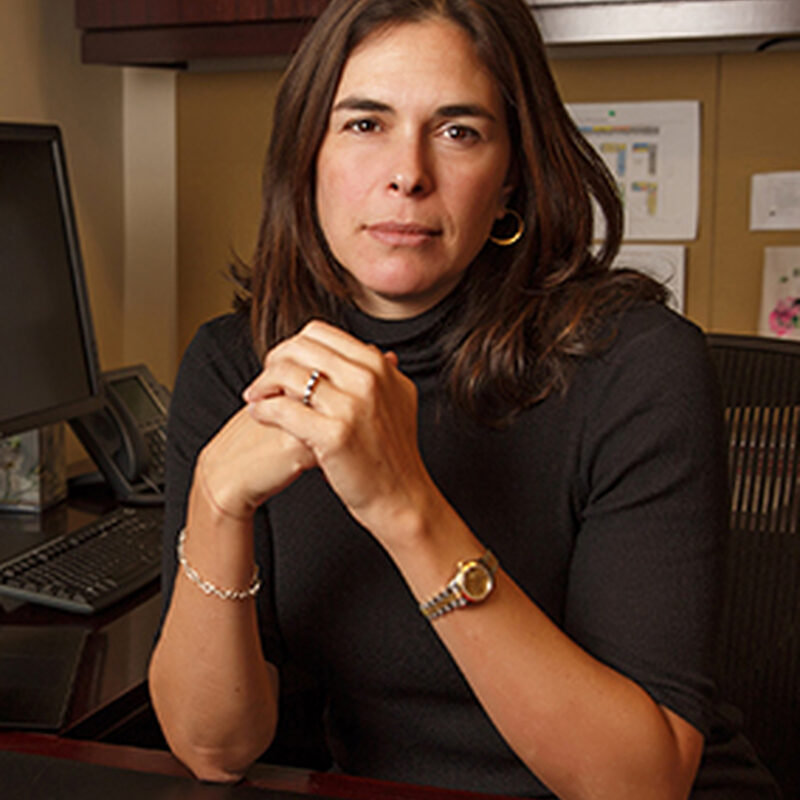
About Sian

Sian Leah Beilock is the president of Dartmouth College and a renowned cognitive scientist. Her research explores the science behind why people “choke” under pressure and how we can perform our best in stressful situations, whether it’s a big test, a public speech, or a championship game. By using a variety of research methods, from test performance to brain scans, she studies how our thoughts and reasoning skills change when we are under stress. Her work has been recognized with the Troland Award from the National Academy of Sciences and has been featured in major media outlets like The New York Times and NPR. Sian is the author of two acclaimed books: Choke and How the Body Knows Its Mind. She previously served as the president of Barnard College and was a leader at the University of Chicago. Today, she applies her knowledge of the human mind to guide one of the nation’s top universities.

About Judson Brewer

See more
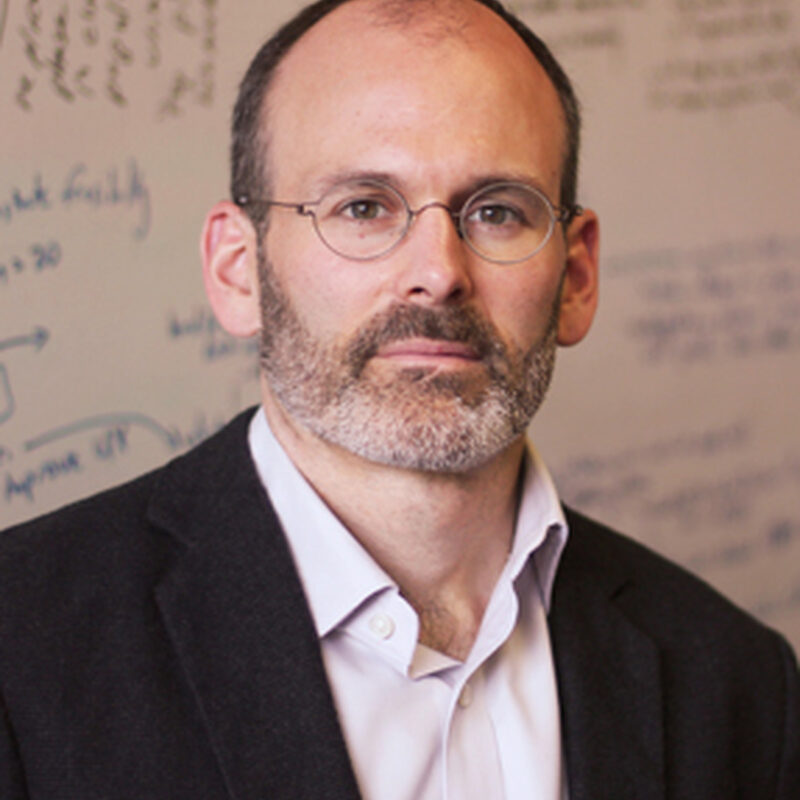
About Judson:

Dr. Judson Brewer is a psychiatrist, neuroscientist, and international expert who has spent over 20 years researching the connection between mindfulness and addiction. He now serves as the Director of Research and Innovation at the Mindfulness Center at Brown University, where he is also an Associate Professor in the School of Public Health and the Medical School. Judson is a leader in the “science of self-mastery,” focusing on how our brains create and maintain the “habit loop” of cravings, whether they are for nicotine, food, or simply worrying. His work uses advanced technology, including real-time fMRI (functional MRI) and EEG, to study the exact neural mechanisms that mindfulness practices can interrupt. He uses these scientific findings to create real-world clinical tools. In 2012, Judson founded MindSciences (formerly Claritas MindSciences) to translate his research into accessible, app-based digital therapeutic programs. His popular apps, including Craving to Quit and Eat Right Now, help individuals break bad habits and overcome addictive behaviors, including emotional eating and smoking. He also developed Unwinding Anxiety, an app based on his New York Times bestselling book of the same name, which shows how anxiety is a habit that can be broken. Judson continues to advance the field, often featured as a speaker in major media, bringing scientifically-backed mindfulness tools to millions of people worldwide.


About Paul Jacobs

See more
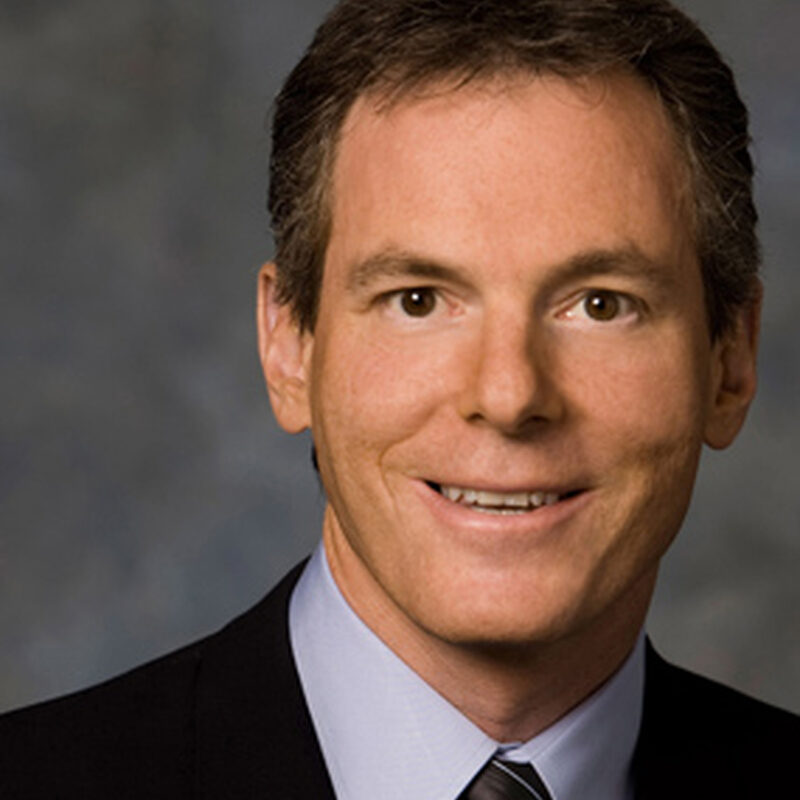
Dr. Paul E. Jacobs is chief executive officer of Qualcomm Incorporated and is also chairman of the Company’s board of directors. Dr. Jacobs has been the primary driver of Qualcomm’s focus on enabling wireless data services, which make the cell phone a tool not only for voice communications, but also the most personal device for entertainment, computing and information access. Following completion of his Ph.D. in 1989 and a year as a post-doctoral researcher at a French government lab in Toulouse, Dr. Jacobs joined the company fulltime in 1990 as a development engineer leading the cell phone digital signal processor software team. His early work focused on the initial variable-rate 8 kbps speech codec for CDMA . Following this effort, Dr. Jacobs spearheaded the wireline-quality 13 kbps speech codec effort, which became CDMA’s initial differentiating consumer feature. The core engineering team involved in this effort would later be integral to the development of Qualcomm’s Launchpad™ suite of functions and capabilities that ship as software with every Qualcomm chipset. As an innovative leader of a broad range of technical teams within Qualcomm, Dr. Jacobs has also been granted more than 25 patents for his inventions in the area of wireless technology. In 1995, he became vice president and general manager of the combined handset and integrated circuit division, which was subsequently divided into Qualcomm Consumer Products (QCP) and Qualcomm CDMA Technologies, respectively. He was named senior vice president of the Company in 1996 and president of QCP in 1997; he was named executive vice president of Qualcomm in 2000 and group president of Qualcomm Wireless & Internet (QWI) in 2001. QCP developed and manufactured the wireless industry’s first CDMA digital handsets, supporting the rapid global deployment of cdmaOne in the 1990s. Under Dr. Jacobs, that business became the No. 2 CDMA handset supplier in the U.S. prior to its sale to Kyocera Wireless in 2000, with revenues of more than $1.4 billion in Qualcomm’s Fiscal 1999. At QCP, Dr. Jacobs gained extensive operational experience, helped launch numerous CDMA systems and cultivated important executive relationships at top network operators and manufacturers globally. Other, important developments which began under Dr. Jacobs in QCP include the first Palm OS®-based smartphone. He started Qualcomm’s initiative to include global positioning system capabilities in cell phones (which led to the acquisition of SnapTrack™ and Qualcomm’s development of gpsOne™ position-location technology) and drove the development of a uniform set of application programming interfaces to simplify the process of putting software on handsets. Dr. Jacobs expanded this latter idea into the overall concept for the BREW® system, which included dynamic downloading of applications to cell phones with checks for digital signatures on the applications to ensure the integrity of the content, and the business ecosystem that enables BREW developers to engage operators globally and receive payment for their applications. The BREW solution is now deployed broadly by wireless network.

About Kate Bowler

See more
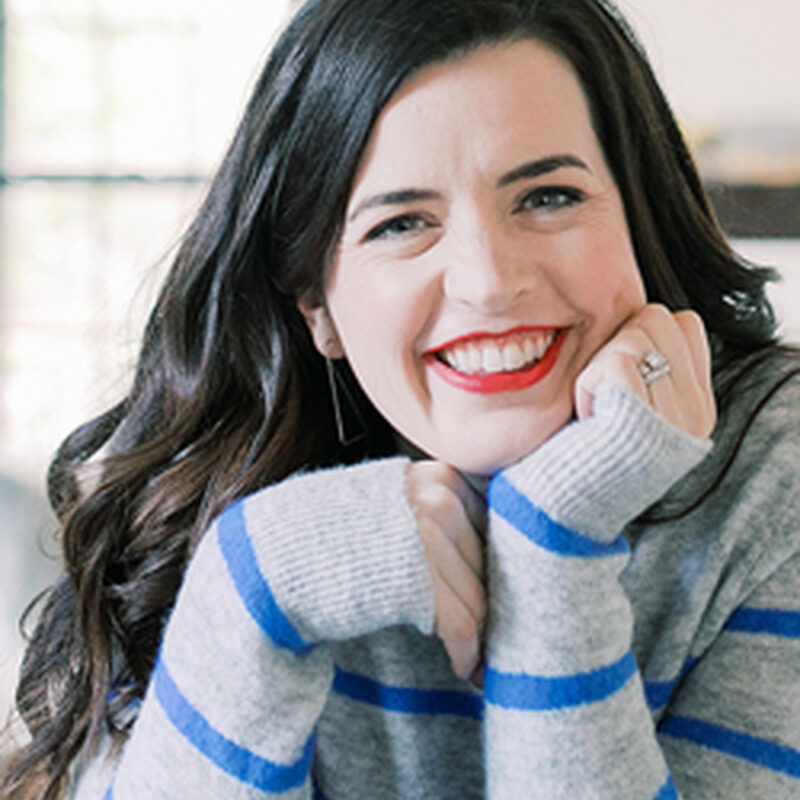
Kate Bowler is a New York Times bestselling author, a professor at Duke Divinity School, and a popular podcast host. Her work centers on the difficult topic of suffering, and she often challenges the idea of “toxic positivity” — the belief that everything happens for a reason. After she was diagnosed with Stage IV cancer at age 35, she began a national conversation about how to speak openly and honestly about life’s hardships. She’s the author of several books, including the memoir Everything Happens for a Reason (and Other Lies I’ve Loved), which became a bestseller and helped many people feel less alone in their struggles. She also hosts the award-winning podcast “Everything Happens,” where she talks with guests like Malcolm Gladwell and Anne Lamott about how they’ve dealt with difficult circumstances. In recent years, she has continued to write, publishing works like No Cure for Being Human and a devotional called Good Enough: 40ish Devotionals for a Life of Imperfection. Her work provides a mix of personal stories, humor, and historical research to help people navigate a world that isn’t always fair or easy.

Let’s find a way.

One of the most humiliating things that you can say about someone is they choked. And boy, do I know that feeling.

What does curiosity feel like? It feels good.

Joy is so important to your health.

Life is so beautiful, and life is so hard.

Five people, five very different collisions with what the human brain does under strain.

An open water swimming icon whose greatest achievement came after four failed attempts. A goalkeeper whose toughest loss transformed failure into discovery.

A psychiatrist who studies habit formation and asks the rest of us to get curious about our own habits, a journalist who nearly wellnessed himself into the ground, a historian who got the worst news of her life and refused to lie about it.

These voices have led us through five different ways the brain and body learn to meet what is hard, through practice, attention, reward, meaning, and connection.

Welcome to TEDMED now, where science and story inspire curiosity.

I’m your host, Kelly Thomas.

This season, we set out to answer one question.

What does resilience actually mean?

We followed endurance with Diana Nyad and found a brain that can keep learning through failure.

We sat inside pressure with Xeon Bilox and found that the way we practice can shape how we perform when the stakes are high.

We got curious about our habits with a Judson Brewer and learned that mindful attention can help the brain loosen its grip on old reward patterns.

We made room for joy with AJ Jacobs and found that resilience cannot be sustained without recovery.

And we sat with the hardest one with Kate Bowler and learned what it means to keep living when control is never fully returned.

Five stories. Five different ways of meeting what is hard. And by the end, we discovered that resilience was never a single trait that you either have or you do not.

It’s a set of capacities that help the brain and the body adapt under strain. Learning through repetition, staying flexible under pressure, becoming curious about our reactions, protecting recovery and joy, and letting other people help carry what we cannot control.

And every one of those capacities draws on overlapping systems in the brain, just in different combinations.

Among the systems that appear again and again are the prefrontal regions involved in attention, planning and regulation.

The amygdala and related systems that detect significance and potential threat. And reward circuits that help the brain learn what is worth approaching or repeating.

Different challenges recruit these systems in different combinations.

Across resilience research, these systems appear repeatedly along with the hormonal, autonomic and social processes that help the brain and body respond to strain.

In one landmark animal experiment, pairs of rats received matched tail shocks. One could turn a wheel to stop each shock, but the other had no control.

The uncontrollable stress produced behavioral and neurochemical consequences that the controllable stress did not.

And the medial prefrontal cortex was central to that difference. Same physical stressor, a very different biological outcome shaped by whether the animal had control.

Every episode this season, without saying so directly, has been a story about these overlapping systems adapting under strain.

Which one needed the most help moment to moment and what tipped the balance?

And there’s one more piece, one that showed up in nearly every episode whether we named it or not, other people.

Connection doesn’t just feel good. It regulates that same balance from outside a single nervous system, a team, a study partner, a hand to hold.

So today, we’re not adding a sixth story.

We’re going back through the five we already told you and showing you the overlapping systems underneath them.

Five different doors into resilience.

Let’s start where the season started. But instead of running through five separate stories, we’re grouping them into pairings because the real insight of this finale isn’t any one story. It’s what happens when you put them next to each other.

When you achieve your dreams, it’s not so much what you get, it’s who you become. How proud am I to stand in front of you and say to you that I’m a person who never ever gives up.

When we first told Diana Nyad’s story, it was easy to hear it as an athlete’s story. Extraordinary effort, extraordinary perseverance, extraordinary result.

But go back and listen again.

She was sixty four years old on that fifth attempt, not twenty five, sixty four, which means the most important thing about her story was never the swimming.

It was that she was still capable of building something new in her brain, decades after most people assume that door has closed.

Every attempt gave her brain and body new information Across years of training, repetition, feedback, and sustained effort, strengthen the systems that support learning, endurance, and adaptation.

Neuroplasticity changes with age, but it does not disappear.

So if there’s one thing to take from NIAT going into this finale, it’s this.

Perseverance isn’t a young person’s trait. It’s available in the next small choice no matter how many times you’ve already failed, no matter how old you are when you start.

One of the most humiliating things that you can say about someone is they choked. And boy, do I know that feeling.

When we look at Bailock next to Nayad, we see they’re doing something similar across very different timelines.

Bailock’s whole body of research is about what happens when the prefrontal cortex tries too hard, when pressure consumes working memory or conscious monitoring interferes with a skill that should be running automatically.

Her fix wasn’t willpower.

It was practicing under real conditions, closing the gap between training and performance. So the skill is less likely to be disrupted when pressure arrives.

What Bailock studies is stress you can see coming, like a test, a save, or a talk, the kind of stress you can rehearse under real conditions in advance.

Put them together, and here’s what practice is actually doing. It’s changing what the brain expects.

Nayad’s brain learned across decades that failure is data, not a verdict. Bilox research shows a similar kind of recalibration on a much shorter timeline.

Different timelines, same underlying shift. Practice doesn’t just build skill. It changes what the brain predicts is about to happen.

The second pairing is quieter.

It’s about where our attention goes once you stop trying to force it somewhere else.

When we get curious, we step out of our old fear based reactive habit patterns, and we step into being. We become this inner scientist where we’re eagerly awaiting that next data point.

Brewer’s episode was the one about the smallest moments.

In that episode, I used a habit of my own, my hand reaching for my phone before I’d even decided to to test his idea out loud.

Brewer doesn’t ask people to white knuckle their way out of a habit.

He asks them to get curious about it instead.

His argument was never that willpower is useless.

It’s that willpower is expensive. And the prefrontal cortex, the very thing you’d need to override a habit, is, in his words, the first part of our brain that goes offline when we get stressed out.

Instead of trying to overpower the habit, he asks us to get curious about what it actually feels like.

That awareness can help the brain update the habit’s reward value, and curiosity gives attention somewhere else to go.

Curiosity isn’t only a personality trait that some people have more than others. It is also a stance we can practice.

One we can take toward an urge, a fear, a diagnosis, or a hard rep.

Instead of make this feeling go away, we ask, what is this? That question alone can be the difference between reacting and learning.

AJ Jacobs arrived at a complementary insight from a different direction.

Joy is so important to your health that very few of these behaviors will stick with me unless there’s some sense of pleasure and joy in them.

Jacobs spent a year turning his own body into a research project.

And the thing he found at the end of it wasn’t a new supplement or protocol.

It was that he’d optimized his way out of the very relationships and pleasures that health was supposed to protect.

That matters more than it might sound like because most of us are living some smaller version of Jacob’s experiment, an over scheduled life where joy gets treated as a thing you’ve earned after everything else is handled.

But his finding and the neuroscience underneath it says the opposite.

Joy helps restore motivation, widen attention, and make healthy behaviors more likely to last.

It isn’t simply the reward at the end of resilience.

It is one of the conditions that sustains it, which means making room for joy isn’t indulgent. It’s structural.

Here is the thread connecting them.

Brewer showed that paying close attention to an urge often reveals it isn’t as rewarding as the brain predicted. The craving promises relief and delivers less than expected, and that changes its pull going forward.

Jacobs found close to the reverse. Paying attention to what actually brings joy is what makes a healthy behavior rewarding enough to stick.

Different direction, same larger lesson.

Attention doesn’t only reveal what is rewarding. Over time, it can help reshape what we pursue.

And then there’s the pairing that isn’t really a pairing at all.

It’s Bowler and everyone who came before When I was sure that I was going to die, I didn’t feel angry.

I felt loved. I felt like I was floating, floating on the love and prayers of all those who hummed around me like worker bees, bringing me notes and socks and flowers and quilts.

If I’m honest, this is the hardest one of the five to sit with for me, and I guess for a lot of you too.

The other stories offered some form of visible resolution.

A shore reached, a skill recovered, a habit interrupted, a life rebalanced.

Oller’s story refuses that kind of ending.

Her story does not restore the promise of control.

What she found instead wasn’t a fix. It was a different relationship to an unfixable thing.

Life is so beautiful, and life is so hard, she said. Both at once unresolved.

It is the capacity to hold two truths without forcing either one to disappear.

Resilience research suggests that realistic, non catastrophic ways of appraising adversity can support long term coping.

But Bohler gives us something less clinical and perhaps more human, a way to tell the truth about suffering without allowing suffering to become the only truth.

Her story also adds the peace the others only gestured at.

Connection isn’t a nice addition to that work. It’s load bearing. It does not remove the threat. It changes her relationship to what cannot be controlled, and connection changes what she has to carry alone.

And once you see that in Boulder’s story, you can see connection running underneath everyone who came before her.

Nyad didn’t cross the ocean alone. We did this, she said of her team.

Bylock’s work shows that how and where we repair can shape what happens under pressure.

Brewer reminds us that our habits do not develop in isolation from the environment around us.

Jacob’s whole crisis was discovering that health without the people he loved wasn’t health at all.

Some challenges can’t be mastered through practice, and they can’t be resolved just by changing where attention goes. They can only be named, held differently, and shared.

Different stakes, same requirement.

Some things can only be carried, not solved.

So here’s the season in one breath.

Endurance builds through repetition. The brain and body learning from every attempt.

Pressure training rehearses flexibility, so skill is less likely to disappear when stress arrives.

Curiosity turns attention toward what we are actually experiencing, giving old patterns a chance to change.

Joy restores motivation and helps make the behaviors that protect us sustainable.

And meaning and connection help us carry what practice alone cannot control.

Five different ways the brain learns to meet what is hard. Through practice, attention, reward, meaning, and connection.

And maybe that’s the real finding of this season.

There was never a single formula for resilience because there was never a single door.

Wherever you’re standing right now, training for something, recovering from something, grieving something, curious about something, there’s a door from there.

We don’t want to leave you with five more things to remember, so here are three things to practice drawn from all five conversations.

One, name it. Say the true sentence.

Bailock’s research found that people who wrote their worries down before a stressful event performed better.

The writing seemed to clear working memory of the load that would otherwise compete for attention.

Bowler said it out loud on a stage. Life is so beautiful and life is so hard. Putting feelings into words can reduce emotional reactivity and engage brain regions involved in regulation.

It does not solve the problem, but it can create a little more room to respond.

Two. Practice it small before you need it.

Naya didn’t build the nervous system that got her to Florida in the water off of Key West. She built it over decades, one training swim at a time.

Wylock calls it closing the gap between practice and performance.

Put yourself in a low stakes version of the hard thing on purpose before the high stakes version finds you.

Three, protect the joy and the people on purpose.

Don’t wait for permission, and don’t wait for things to calm down first.

Jacobs learned that the hard way, and it nearly cost him the very relationships his health was supposed to protect.

Schedule the joy. Reach for the people. Let yourself be carried. The way Bowler was, the way Nayad’s team carried her across one hundred and ten miles of open water, she couldn’t have crossed alone.

These three habits are not only for the crisis, the diagnosis, or the big swim. The brain and body remain capable of learning and adaptation across a lifetime. It is never too late to begin practicing any of it.

The brain doesn’t build resilience from one big moment. It builds it the same way it built everything this season, one small moment at a time.

That’s our season. Five talks, many traits, and one brain learning again and again that a hard thing can be met.

Thank you for spending the season with us and with Diana Nyad, Sian Bailock, Judson Brewer, AJ Jacobs, and Kate Bowler.

Five people generous enough to let us take their hardest moments apart in public so the rest of us could learn from their lived experiences.

Thank you for listening to TEDMED now. I’m Kelly Thomas. We’ll see you next time.

Recently Viewed