What does curiosity feel like?
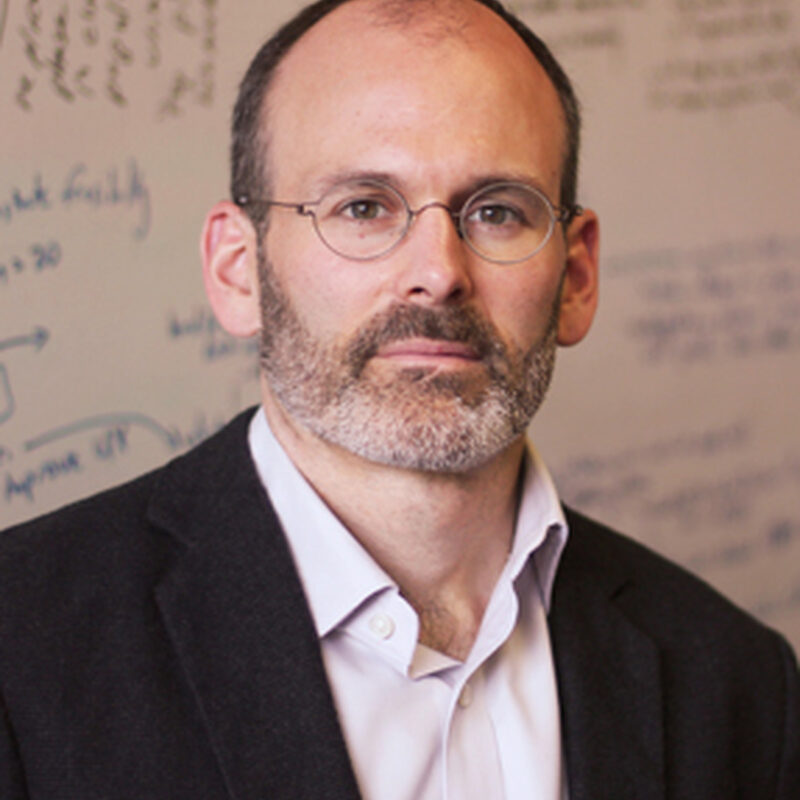
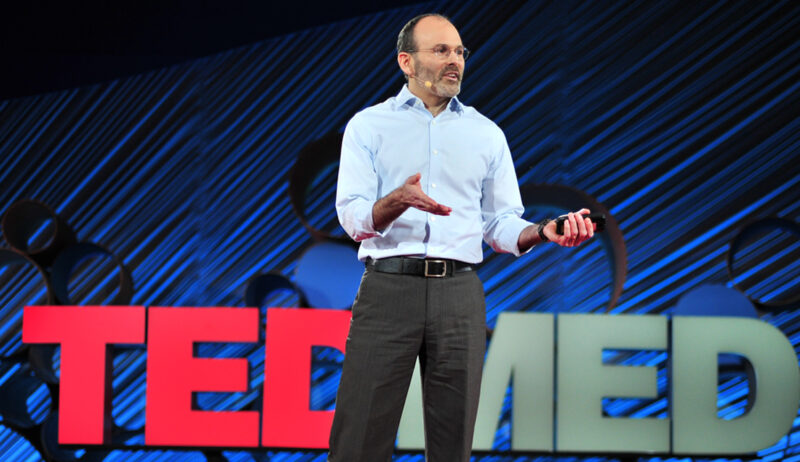
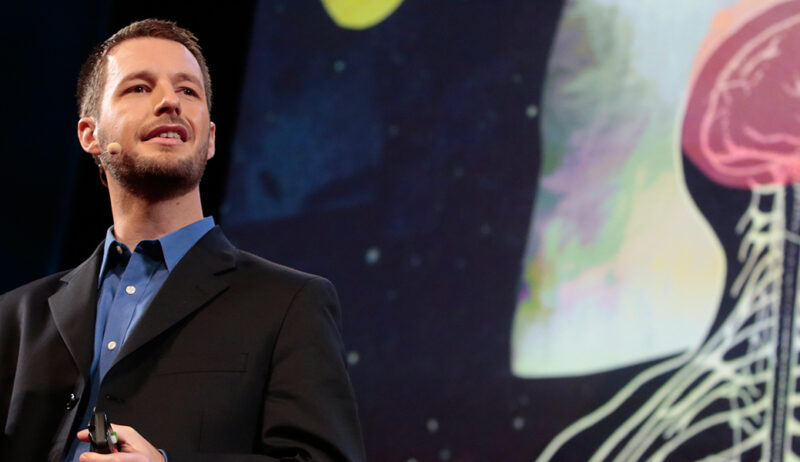
Judson Brewer, psychiatrist and neuroscientist, asks this question in his TEDMED talk.
It feels good.
At first, that sounds almost too simple because when we think about changing a habit, most of us don’t think about feeling good. We think about discipline, willpower, and control.
We think about resisting the thing we want to do.
But for all the ways we talk about resilience, grit, discipline, endurance, what often shapes our lives most are the patterns we repeat without awareness.
So today, we’re asking a different question.
Not just how we endure challenges, but how we interrupt the patterns that we keep repeating.
Welcome to TEDMED now, where science and storytelling inspire curiosity.
I’m your host, Kelly Thomas.
In this episode, we’re exploring Judson Brewer’s TEDMIT talk and the science behind how mindfulness and curiosity can help us break free from automatic habit loops.
Brewer shows us that breaking a habit is not only about resisting an urge, but also about getting curious enough to see the loop clearly.
Curiosity taps into the brain’s reward learning system dopamine linked circuits that help us seek information, pay attention and update what we know.
When we become genuinely interested in an experience, even an uncomfortable one, The brain is no longer trying to escape it.
Instead, it begins to investigate it.
And that investigation can feel surprisingly good because curiosity itself is rewarding.
When we become curious, the brain is not simply observing, it is learning. So when we turn toward an uncomfortable feeling with true interest, something subtle but powerful can happen.
The brain is no longer just asking, how do I make this feeling go away?
It starts asking, what is this? And that question can interrupt the habit loop.
I started to understand this in very ordinary moments throughout my day, Quiet in between spaces, transitioning from parent mode to work mode, waiting in line at a store, or moments after waking in the morning.
I would take out my phone and do what exactly. I’m not sure. There was no urgent message or clear purpose.
And almost before I noticed the feeling, my hand was already reaching for my phone, grabbing it, unlocking it, like I was on autopilot. A pull I couldn’t quite explain.
That is the speed of a habit. Trigger. Behavior. Reward.
But what Brewer asks us to consider is this.
What if, in that tiny space between the urge and the action, we got curious?
What does it feel like in the body? Where is it? Does it stay the same?
Does it move? What do I actually want right now?
That shift from reacting to investigating is where the science of habit change begins.
That is the power of Brewer’s line. It reframes mindfulness not as white knuckled restraint, but as a biologically plausible reward swap, replacing craving with curiosity as the reward.
Brewer frames habits not as failures, but as learning.
It turns out that we’re fighting one of the most evolutionarily conserved learning processes currently known in science, one that’s conserved back to the most basic nervous systems known to man.
That process is called reward based learning.
At its simplest, reward based learning is how the brain learns from experience. The brain notices what happens before a behavior, registers what we do next, and then it tracks what we get from it.
If the outcome feels useful, pleasurable, soothing, stimulating, or even just distracting enough, the brain marks a behavior as worth repeating.
We see some food that looks good. Our brain says, calories, survival. We eat the food. We taste it. It tastes good.
Trigger, behavior, reward. Three simple steps.
But inside those three steps is a complex architecture of learning.
This involves dopamine based reinforcement learning, the brain’s way of updating behavior based on what it predicts will be rewarding.
Dopamine is often described as the brain’s feel good chemical. But that is too simple. Dopamine is involved in motivation, prediction, attention and learning. It helps the brain answer questions like: Was that better than expected?
Should I pay attention to this next time? Is this behavior worth repeating?
Over time, repeated behaviors become encoded in circuits involving the basal ganglia, especially the striatum, a region involved in habit formation, reward learning and automatic action.
And this is where the brain’s efficiency can work against us. Because the more often a loop is repeated, the less effort it takes.
The brain automates the sequence. Eventually, what started as a choice becomes a reflex.
The moment with my phone is a perfect example. The trigger wasn’t dramatic. It was the context, a familiar pause, a transition, the phone nearby.
And before I realized it, the behavior was already underway. Reach for the phone, unlock it, and check emails, texts, headlines, or scroll.
And the reward? Not real satisfaction, meaning, or even necessarily pleasure.
Maybe stimulation or novelty? That is why the phone can feel so compelling.
The brain is built to notice what is new and certain and potentially irrelevant. And when there is even the possibility of something interesting, a message, a headline, a notification, a post, attention sharpens.
So when my phone lights up or even when I imagine that something might be waiting, my brain starts predicting what might happen.
And every time I check, the brain compares what it expected with what it actually finds.
There could be nothing or something rewarding that feels urgent or useful.
That gap between what the brain predicts and what actually happens is called a reward prediction error. When the outcome is better or more relevant than expected, dopamine signaling helps stamp in the learning.
Check again. This might be worth it.
Over time, the phone itself becomes a cue that can trigger anticipation and anticipation can start to feel like craving.
So the phone gives the brain something immediate. A cue, a question, a possible answer.
And if checking briefly changes my state, if it interrupts the quiet, fills the pause, or resolves even a tiny uncertainty, the brain learns the association.
Not because the phone always feels good, but because the brain learned that it might.
Phone nearby: a quiet moment, a pause, a notification, behavior: unlock, check, scroll.
The possibility of something interesting, useful, urgent or novel.
And if the outcome is reinforcing even slightly, the habit loop gets stronger.
Reward does not have to be deeply satisfying for the habit loop to stick. It only has to be reinforcing and the brain learns, do that again.
So if habits are learned, how do we unlearn them?
Most of us begin with willpower. We try to resist, override or control to force ourselves out of the behavior. Don’t reach for that phone, unlock it and scroll.
And sometimes that works because the brain does have systems for self control.
A key one is the prefrontal cortex, the area just behind the forehead that helps us plan, pause, evaluate consequences and inhibit impulses.
This is the part of the brain that can say, I don’t need to check my phone right now. This is not urgent.
We call this cognitive control. We’re using cognition to control our behavior.
Unfortunately, this is also the first part of our brain that goes offline when we get stressed out, which isn’t that helpful.
Cognitive control is useful, but it is also fragile. It takes effort.
It depends on attention, energy, and emotional bandwidth. And when we are stressed, tired, overwhelmed, or distracted, the prefrontal cortex becomes less available to help us pause and choose.
That is when more automatic circuits take over.
The habit system does not need us to think deeply. It only needs the cue. Phone nearby, and the loop starts to run.
Now we can all relate to this in our own experience. We’re much more likely to do things like yell at our spouse or kids when we’re stressed out or tired, even though we know it’s not gonna be helpful. We just can’t help ourselves.
I may know I do not want to start my morning by checking my phone.
That one quick look can turn into ten minutes of emails, texts, headlines, and noise. But if I’m tired, stressed, or half awake, the part of my brain responsible for pausing and choosing is not at its strongest.
My prefrontal cortex needs a coffee.
So when the prefrontal cortex is under strain, the brain falls back on what it has practiced, what I have repeated.
That is why willpower alone is such a difficult strategy.
It asks one of the brain’s most effortful control systems to override deeply practiced habit circuits, shaped by reward based learning.
The habit loop is efficient. The prefrontal cortex is demanding and in a tired or stressed brain that is not a fair fight.
So Brewer asks us to stop relying only on force. Instead of trying to control the habit from top down, he invites us to investigate it from the inside out.
What is the cue? What is the behavior? And what is the reward?
Most importantly, what does the urge actually feel like? That question begins to shift us from control to curiosity.
And that is where the next part of the science begins.
What if instead of fighting our brains or trying to force ourselves to pay attention, we instead tapped into this natural reward based learning process, but added a twist? What if instead we just got really curious about what was happening in our momentary experience?
That shift matters because craving is not just an idea. It’s a body state, a tightening, a restlessness, a pull, a sense of I need this now.
When we bring attention to those sensations, we recruit interoception, the brain’s ability to sense what is happening inside the body.
Regions like the insula help track those internal signals.
And mindfulness may also quiet some of the self referential brain activity that turns a sensation into a story of I need this, I can’t handle this, I’ll feel better if I just do it.
Curiosity changes the relationship to the craving and the craving becomes something to investigate, not something to obey.
When we pay close attention, we may notice something surprising.
The craving is not a command. It’s a set of sensations. It rises, shifts, peaks, and fades.
And the habit itself may not be as rewarding as the brain predicted.
Well, here’s an example from one of our smokers. She said mindful smoking smells like stinky cheese and tastes like chemicals. Yuck.
At that moment, the brain is learning.
It predicted a reward. Maybe relief, pleasure, or satisfaction. But when we pay close attention, the actual experience may not match the prediction.
The cigarette tastes harsh. The scroll feels empty. The snack is not as satisfying as expected.
The brain is updating. It expects one kind of reward, but delivers something else.
Instead of reinforcing the old association of craving, behavior, reward, mindful attention gives the brain new information.
This isn’t actually giving me what I thought it was. This urge is uncomfortable, but it changes. I don’t have to obey it.
So Brewer is not asking people to overcome the craving with willpower. He is helping them see the habit loop clearly enough that the brain can learn from it by paying close attention to what is happening in the moment.
Over time, the reward value drops, the automatic pull weakens and the craving becomes less of a command and more of an experience we can observe, understand and move through.
That changes the brain’s relationship to the urge. Habit loops depend on automaticity. Trigger, behavior, reward.
Mindfulness inserts awareness into that sequence, disrupting it.
It evolves into trigger, awareness, sensation, choice.
Once that urge becomes visible, we can study it.
Mindfulness is just about being really interested and getting close and personal with what’s actually happening in our bodies and minds from moment to moment.
This willingness to turn toward our experience rather than trying to make unpleasant cravings go away as quickly as possible.
And this willingness to turn toward our experience is supported by curiosity, which is naturally rewarding. What does curiosity feel like? It feels good.
Curiosity feels good because the brain likes learning. It likes resolving uncertainty and discovering what is true.
Curiosity taps into the brain’s reward learning system.
Dopamine linked circuits involved in motivation, information seeking, learning and memory. When we’re curious, the midbrain, nucleus accumbens and hippocampus, areas of the brain that are wired for reward and learning, are engaged.
Curiosity isn’t a personality trait. It’s a motivational state.
The brain leans in, it wants to know, and that gives the brain another kind of reward.
Not the reward of checking my phone, but the reward of investigating the urge.
Instead of I need to check, curiosity asks, what is this need?
Instead of I need to know what I missed, curiosity asks, what does not knowing feel like?
Instead of one quick look, curiosity asks, what happens if I wait?
Those questions interrupt the habit loop, create a pause, and give the brain a chance to learn something new.
When we get curious, we step out of our old fear based reactive habit patterns, and we step into being. We become this inner scientist where we’re eagerly awaiting that next data point.
The inner scientist. I love that phrase because it changes the way we relate to the urge. Instead of judging, why am I doing this again? An inner scientist asks, what is happening here? What does this behavior actually give me?
When we look closely, we notice that habits are made up of many small pieces, body sensations, thoughts, emotions, predictions, and memories. Maybe a tightness in the chest, quickening in the mind, restlessness in the hands. If habits feel like one giant command, check the phone, that can seem impossible to resist. But if habits are a collection of sensations, then we can get curious about the pieces.
So next time the trigger appears, my phone is nearby, I’m standing in line, or I’m beginning my day, my brain predicts a reward and my body starts to act.
Mindfulness gives the brain new data. What does the urge feel like before I check?
What happens if I wait? What do I actually feel like afterwards?
That is not self judgment. That is data collection.
And over time, that data can change the reward value of the habit.
Mindfulness doesn’t magically erase a habit, but it can change the learning environment.
Instead of automatically reinforcing the old loop, mindfulness helps us observe the loop and that gives the brain a chance to update.
When we pause and notice the urge, we engage the networks involved in body awareness, including the insula. The prefrontal cortex also comes back into the picture.
Mindfulness is not just asking the prefrontal cortex to clamp down harder. It is giving the prefrontal cortex more information to work with.
Instead of phone, reach, check, mindfulness creates a new sequence phone, pause, feel, notice, choose.
And in that pause, the prefrontal cortex has a better chance to help guide behavior.
When we are caught in a craving or habit loop, the mind often turns the urge into a story of feeling like we need to do something. That caught up in me quality is associated with a default mode network.
A set of brain regions involved in self referential thinking and mind wandering.
One key hub of that network is the posterior cingulate cortex or PCC.
Brewer’s work suggests that the PCC may be involved when we’re caught up in craving, rumination or self referential loops, but when we bring mindful awareness to the experience, that caught up feeling can begin to quiet.
When we are caught in the loop, the brain is fused with the story, but when we become mindful, the brain begins to observe it.
Back to my phone.
Caught sounds like I need to check. There might be something waiting. I’ll feel better once I know. But the inner scientist sounds like what does needing to check feel like?
Is it in my chest, hand, or jaw? Is it anticipation or restlessness? And what happens if I stay with that feeling for one breath before I act?
That is training my brain because every time I notice a cue and investigate the urge, I’m giving my brain a new experience.
Phone nearby does not have to mean reach, unlock, scroll.
The old loop gets interrupted and a new one begins to form.
Trigger, curiosity, awareness, choice.
That is how mindfulness can help us break old habits and build new ones. Not by forcing the brain into submission, but by giving the brain better data.
And with enough repetition, better data becomes new learning, and new learning becomes a new pattern.
Notice the urge, get curious, feel the joy of letting go, and repeat.
The next urge is not a problem to defeat. It’s a chance to learn. When that urge appears, the question becomes, can I notice it, feel it, get curious?
And in that moment of curiosity, the loop begins to change.
So let’s come back to Brewer’s question.
What does curiosity feel like? It feels good.
Not because cravings are pleasant or habit change is easy, but because curiosity gives the brain another way to learn.
It lets us turn toward the moment instead of being pulled through it, to feel the urge as sensation, not command.
To see what the habit actually gives us, not just what it promises.
And that is where change begins, not with force, but with a different kind of reward.
The reward of seeing clearly, understanding, and realizing. I do not have to obey every urge my brain predicts will help me.
For me, that might begin in the smallest way possible.
Waking up, seeing my phone nearby, feeling my hand want to move, and taking a moment to pause and ask myself why I’m reaching for my phone in the first place.
That moment may not look dramatic from the outside, but inside the brain it is a new experience from which the brain is learning.
If habits are learned, they can certainly be relearned and sometimes the first step is not trying harder. It’s simply getting curious.
You’ve been listening to TEDMED now where science and storytelling inspire curiosity.
Share this podcast with someone who might need it or take a moment this week to notice one small habit with curiosity.
Until next time, stay curious.